Table of Contents
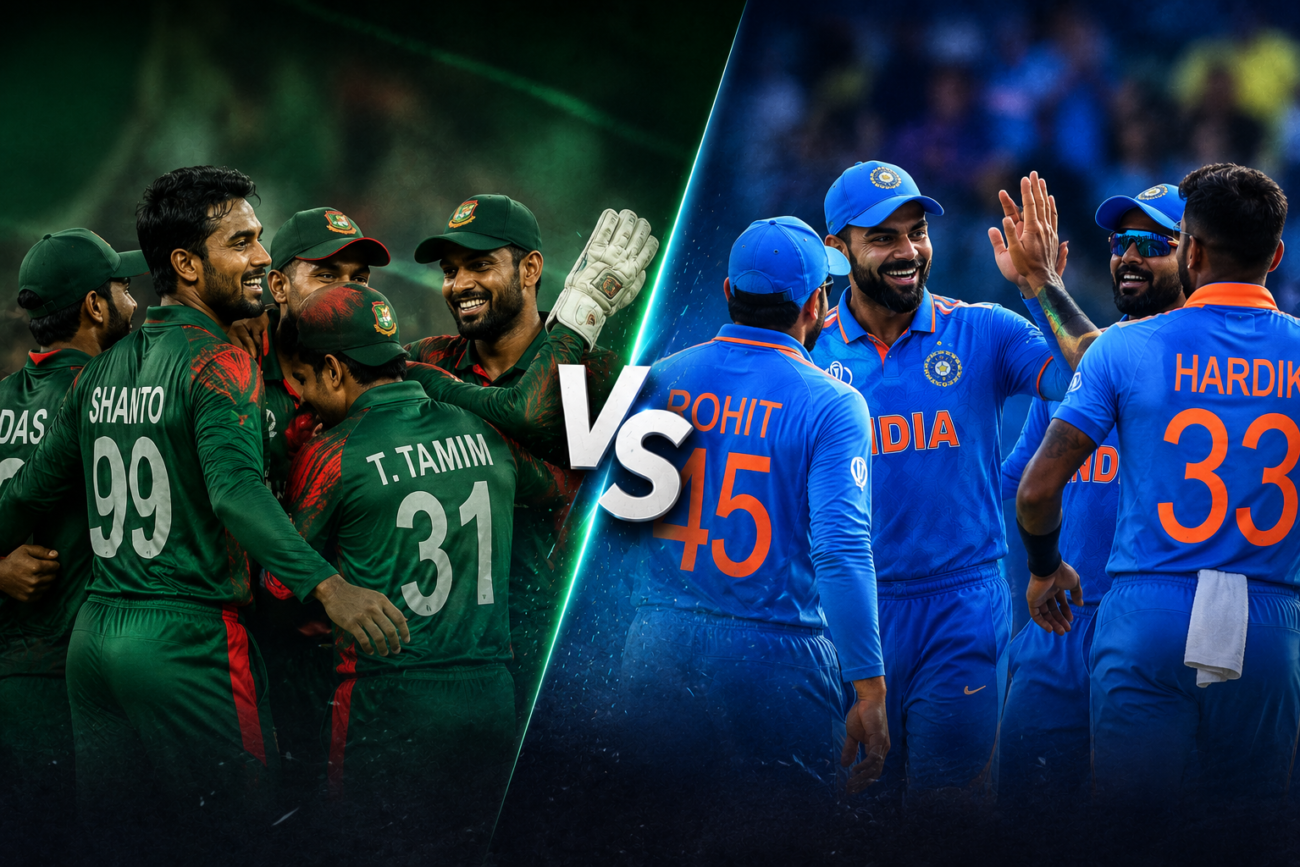
The cricket rivalry between the two sides has grown into one of the most followed contests in modern international cricket. What began as a mismatch in early encounters gradually evolved into a competitive and emotionally charged battle. Over the years, both teams have produced unforgettable performances, dramatic finishes, and iconic individual moments that shaped the narrative of this rivalry. From one-sided early matches to thrilling modern-day contests, the journey reflects growth, pressure, and transformation. Fans from both nations bring unmatched energy, turning every encounter into a high-stakes event. This rivalry continues to evolve with time, making each match a fresh story of pride and competition.
Recent Matches Table
| Date | Match | Format | Venue | Winner | Margin | Top Performer |
|---|---|---|---|---|---|---|
| 24 September 2025 | India vs Bangladesh | T20I | Dubai | India | 41 runs | Abhishek Sharma |
| 20 February 2025 | India vs Bangladesh | ODI | Mirpur | India | 6 wickets | Rohit Sharma |
| 01 October 2024 | India vs Bangladesh | Test | Kanpur | India | 7 wickets | Ravindra Jadeja |
| 23 September 2024 | India vs Bangladesh | Test | Chennai | India | 280 runs | Ravichandran Ashwin |
| 22 June 2024 | India vs Bangladesh | T20I | North Sound | India | 50 runs | Hardik Pandya |
| 19 October 2023 | India vs Bangladesh | ODI | Pune | India | 7 wickets | Virat Kohli |
Team Statistics Summary Table
| Format | Total Matches | India Wins | Bangladesh Wins | No Result | Ties | India Win Percentage |
|---|---|---|---|---|---|---|
| Test Matches | 15 | 13 | 0 | 2 | 0 | 86.66 percent |
| One Day Internationals | 42 | 33 | 8 | 1 | 0 | 78.57 percent |
| T20 Internationals | 18 | 17 | 1 | 0 | 0 | 94.44 percent |
| Overall Combined | 75 | 63 | 9 | 3 | 0 | 84.00 percent |
Individual Batting Records Table
| Player | Team | Matches | Innings | Total Runs | Batting Average | Highest Score |
|---|---|---|---|---|---|---|
| Virat Kohli | India | 12 | 12 | 807 | 73.36 | 103 not out |
| Rohit Sharma | India | 13 | 13 | 738 | 61.50 | 137 |
| Mushfiqur Rahim | Bangladesh | 22 | 22 | 674 | 33.70 | 105 |
| Tamim Iqbal | Bangladesh | 19 | 19 | 596 | 31.36 | 70 |
| Shakib Al Hasan | Bangladesh | 22 | 21 | 592 | 29.60 | 85 |
| Shikhar Dhawan | India | 10 | 10 | 412 | 41.20 | 126 |
Individual Bowling Records Table
| Player | Team | Matches | Total Wickets | Bowling Average | Economy Rate | Best Bowling |
|---|---|---|---|---|---|---|
| Shakib Al Hasan | Bangladesh | 22 | 29 | 35.24 | 4.86 | 5 for 36 |
| Mustafizur Rahman | Bangladesh | 12 | 25 | 22.16 | 5.32 | 6 for 43 |
| Mashrafe Mortaza | Bangladesh | 20 | 23 | 38.17 | 5.09 | 4 for 38 |
| Ravichandran Ashwin | India | 11 | 22 | 26.40 | 4.62 | 4 for 41 |
| Bhuvneshwar Kumar | India | 14 | 18 | 28.11 | 4.88 | 3 for 54 |
| Jasprit Bumrah | India | 10 | 17 | 21.35 | 4.40 | 4 for 55 |
Rivalry Origins: Early International Meetings
The first encounters between the two sides in international cricket created a clear imbalance in experience and skill level. One team arrived with a long-established cricketing structure, while the other was still finding its identity on the global stage. These early matches were heavily influenced by disciplined batting performances and structured bowling attacks. The newer side showed sparks of talent but often struggled to convert starts into match-winning contributions. Pressure situations exposed inexperience, especially in chasing targets. However, these games were important in shaping future competitiveness. They helped build exposure, confidence, and understanding of elite-level cricket demands. Over time, even the losing side gained valuable lessons that would later influence their development in limited-overs formats and beyond. The foundation of a long-term competitive sporting relationship was quietly being built during these early meetings.
| Match Type | Winner | Margin | Key Performer |
| ODI | India | 7 wickets | Top-order batter |
| Test | India | Innings win | Spinner dominance |
| ODI | India | 85 runs | Middle-order century |
| T20 | India | 6 wickets | Fast bowler impact |
| ODI | India | 5 wickets | All-round performance |
Growth Phase of Emerging Side
As international exposure increased, the developing team began strengthening its cricketing foundation. Domestic leagues improved player quality, and international experience started reflecting in performance. Batting units became more stable, and bowlers developed better control and variation. Although results against stronger opponents were still inconsistent, the margin of defeat gradually reduced. The team’s body language also shifted from defensive survival to competitive intent. In several matches, they managed to challenge opposition scoring rates and build partnerships under pressure. Fielding standards improved significantly, reducing easy runs and missed opportunities. This phase marked the transition from underdog status to a team capable of producing surprises. The improvement was not immediate, but it was steady and visible in key performances across formats.
| Year | Format | Improvement Area | Result Impact |
| 2004 | ODI | Batting stability | Reduced collapse rate |
| 2007 | T20 | Bowling variation | Competitive spells |
| 2010 | ODI | Fielding standards | Fewer extra runs |
| 2012 | Test | Batting patience | Longer innings |
| 2015 | ODI | Death overs control | Narrower losses |
Period of Dominance and Control
During the peak dominance phase, one side consistently controlled matches through superior execution in all departments. Strong top-order starts often set the foundation for large totals, while disciplined bowling attacks restricted scoring opportunities. The opposition frequently struggled against spin in middle overs and pace variations in death overs. Tactical awareness and experience in pressure moments played a crucial role in maintaining control. Even in matches where conditions were challenging, adaptability helped maintain winning consistency. The gap between the teams was clearly visible in decision-making under pressure. However, this period also pushed the weaker side to reassess strategies and invest in long-term player development. It became a learning curve that eventually contributed to future competitiveness.
| Season | Format | Dominant Skill | Outcome Pattern |
| 2010 | ODI | Spin control | One-sided wins |
| 2013 | Test | Batting depth | Innings victories |
| 2015 | ODI | Power hitting | High totals |
| 2016 | T20 | Death bowling | Restricted chases |
| 2018 | ODI | All-round strength | Comfortable wins |
Turning Point and Surprise Victories
A major shift in the rivalry came when the underdog side secured unexpected victories against a stronger opponent. These matches were defined by fearless batting, disciplined bowling, and sharp fielding moments. The wins were not just statistical upsets but emotional milestones that changed perception. Players gained belief that they could compete and win at the highest level. For the stronger team, these losses highlighted vulnerabilities in handling pressure and adapting to unexpected conditions. Fans witnessed intense finishes, dramatic collapses, and moments of brilliance that reshaped expectations. This phase added unpredictability to the rivalry and increased its global attention. Every future encounter began carrying the possibility of an upset, making the contest more balanced and exciting.
| Match | Venue | Result | Key Moment |
| ODI | Home ground | Upset win | Late batting surge |
| T20 | Neutral venue | Narrow win | Final over wickets |
| ODI | Away ground | Surprise chase | Partnership finish |
| ODI | Home crowd | Historic win | Bowling collapse |
| T20 | Tournament | Close win | Fielding brilliance |
High Pressure Tournament Clashes
Tournament meetings between the two sides brought a different level of intensity. Every match carried qualification pressure, making tactical decisions more critical than ever. Captains had to manage resources carefully, especially during powerplays and death overs. The field placements became more aggressive, and bowling changes were often decisive. Batters faced immense pressure due to high stakes and large crowds. These encounters often produced close finishes and memorable performances. Momentum shifts happened quickly, and one over could change the entire match outcome. Both sides learned to adapt quickly, but experience in handling pressure moments often made the difference. These matches played a major role in shaping rivalry perception on the global stage.
| Tournament | Year | Pressure Level | Outcome Type |
| Asia Cup | 2012 | High | Close finish |
| World Cup | 2015 | Very high | Dominant win |
| Asia Cup | 2018 | Extreme | Last-over result |
| World Cup | 2019 | Very high | One-sided chase |
| Asia Cup | 2022 | High | Competitive match |
Global Stage Encounters and Iconic Moments
Matches on the global stage brought unforgettable moments that defined careers and strengthened rivalry narratives. Players delivered career-best performances under immense pressure. Some innings stood out for their timing, aggression, and match awareness, while certain bowling spells changed the direction of entire games. These contests were widely viewed and analyzed, adding to their historical significance. Emotional celebrations and visible disappointment highlighted the importance of these matches for both teams. Tactical execution under pressure became a key differentiator. The global stage also exposed emerging talent, giving young players opportunities to shine under spotlight conditions. These encounters remain some of the most discussed in cricket discussions worldwide.
| Event | Year | Highlight | Impact |
| World Cup | 2007 | Breakthrough innings | Rising confidence |
| World Cup | 2011 | Big chase control | Strong dominance |
| World Cup | 2015 | Spin impact | Match control |
| World Cup | 2019 | Batting display | High pressure win |
| ICC Event | 2023 | Balanced contest | Competitive rivalry |
Modern Era Competition and Balanced Battles
In recent years, the rivalry has become significantly more balanced. Both sides now possess strong batting line-ups and improved bowling depth. Matches are often decided in the final overs, reflecting increased competitiveness. Fitness standards, analytical preparation, and strategic planning have improved overall quality. The underdog side now consistently challenges stronger opposition, especially in shorter formats. Pressure handling has become a key factor, with small mistakes often deciding outcomes. Fans now expect close contests rather than one-sided results. This modern phase represents a matured rivalry where respect and competition coexist. Every encounter now carries uncertainty, making the contest more engaging than ever before.
| Year | Format | Competitiveness | Result Type |
| 2020 | ODI | High | Close finish |
| 2021 | T20 | Very high | Last over win |
| 2022 | ODI | Balanced | Narrow margin |
| 2023 | T20 | High | Super over feel |
| 2024 | ODI | Very high | Tight chase |
Conclusion
This cricket rivalry stands as a powerful example of how competition evolves through experience, resilience, and continuous improvement. Early dominance by one side slowly gave way to more balanced and unpredictable encounters as the other team matured in skill and confidence. Each era contributed defining moments, from one-sided victories to historic upsets and closely fought battles. The rivalry now represents respect mixed with intensity, where no result can be taken for granted. Fans eagerly await every clash, knowing it carries emotion, pressure, and pride. As both teams continue to grow, this rivalry promises even more dramatic chapters in the years ahead.
Frequently Asked Questions
1. Why is this cricket rivalry considered important?
Because it represents a mix of historical dominance, emotional matches, and evolving competitiveness between two passionate cricketing nations.
2. Which team dominated the early encounters?
One team clearly dominated early matches due to stronger experience, better infrastructure, and more consistent performers.
3. What changed the balance in this rivalry?
Improved player development, better domestic systems, and increased international exposure helped reduce the performance gap.
4. Are recent matches more competitive?
Yes, modern encounters are much closer, often decided in the final overs with strong performances from both sides.
5. Why do fans consider these matches emotional?
Because the rivalry carries national pride, historic moments, and intense crowd support that amplify every performance on the field.