Table of Contents
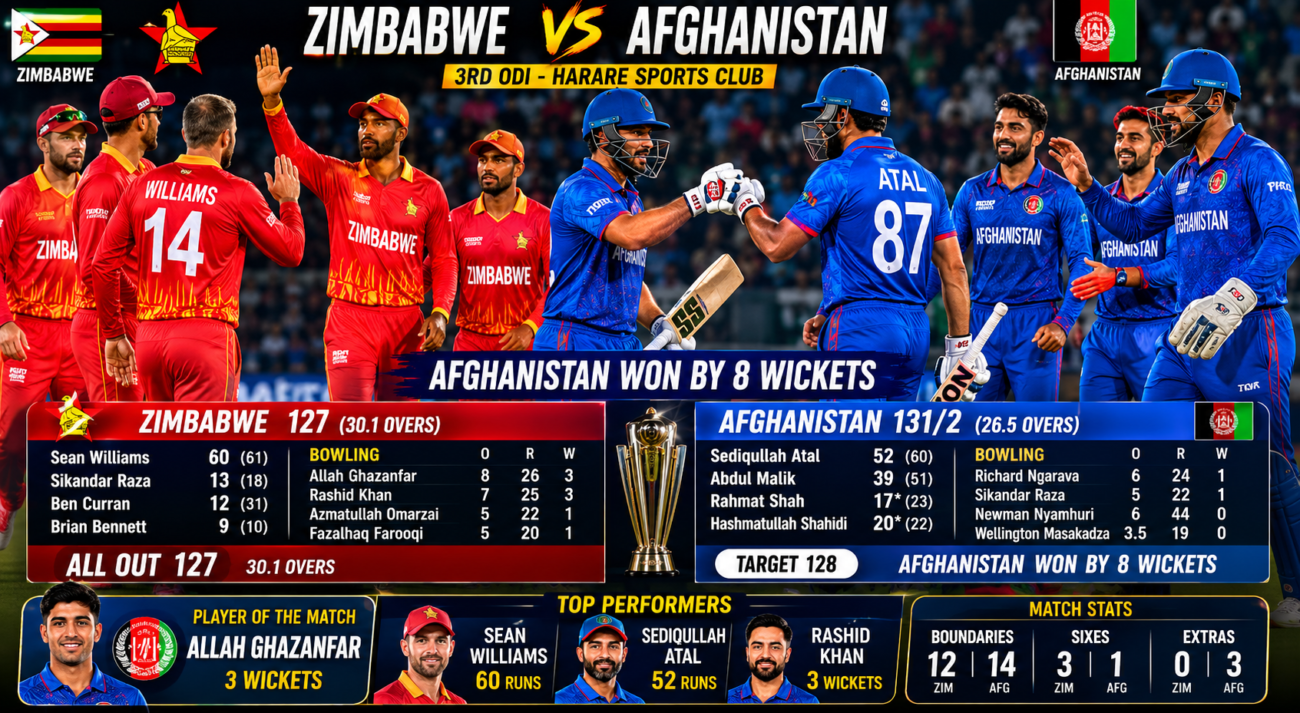
The Zimbabwe national cricket team vs Afghanistan national cricket team match scorecard from the decisive third ODI in Harare provided a fascinating insight into how Afghanistan completed a dominant limited-overs campaign against Zimbabwe. Played at Harare Sports Club on 21 December 2024, the match showcased disciplined bowling, effective batting, and tactical awareness from the visitors. Zimbabwe entered the contest hoping to level the series after suffering a heavy defeat in the previous match, but Afghanistan once again controlled the key phases of the game. This detailed scorecard review examines the performances, statistics, partnerships, turning points, and significance of the result.
Match Overview
Afghanistan arrived in the final ODI with momentum firmly on their side. After the opening ODI was abandoned because of rain and the second match ended in a comprehensive Afghanistan victory, the visitors needed only one more win to secure the series.
Zimbabwe struggled to build partnerships after losing early wickets. Afghanistan’s bowlers exploited the conditions brilliantly before their batters completed the chase with minimal pressure.
Match Summary
| Match | Venue | Date | Format | Zimbabwe | Afghanistan | Result |
| 3rd ODI | Harare Sports Club | 21 Dec 2024 | ODI | 127 all out (30.1 overs) | 131/2 (26.5 overs) | Afghanistan won by 8 wickets |
The summary reveals the one-sided nature of the contest. Zimbabwe’s batting never recovered after the early breakthroughs. Afghanistan’s bowlers dictated the game from the outset, restricting the hosts to a below-par total before their batters comfortably reached the target. The victory secured the ODI series and underlined Afghanistan’s growing consistency in international cricket.
Toss and Team Decisions
Zimbabwe won the toss and elected to bat first. The decision appeared reasonable on a surface expected to become slower later in the day. However, Afghanistan’s bowling attack quickly exposed weaknesses in the Zimbabwe batting lineup.
The visitors benefited from disciplined new-ball bowling and then tightened the screws through spin. Once wickets began to fall regularly, Zimbabwe found it difficult to rebuild.
In contrast, Afghanistan approached the chase with patience and composure, ensuring there were no unnecessary risks while pursuing a modest target.
Zimbabwe Innings Analysis
Zimbabwe required a strong start but lost wickets at regular intervals. The top order struggled against accurate bowling, leaving Sean Williams to shoulder much of the responsibility.
Williams produced a fighting half-century and briefly gave the hosts hope of reaching a competitive score. Unfortunately, he lacked support from the other end as Afghanistan’s bowlers continued to strike.
The middle order collapsed under pressure, and Zimbabwe were eventually dismissed for only 127 runs.
Zimbabwe Batting Scorecard
| Batter | Dismissal | Runs | Balls | 4s | 6s |
| Joylord Gumbie | c b Ghazanfar | 3 | 14 | 0 | 0 |
| Ben Curran | lbw Ghazanfar | 12 | 31 | 1 | 0 |
| Craig Ervine | c Alikhil b Omarzai | 5 | 5 | 1 | 0 |
| Sean Williams | c Nabi b Rashid Khan | 60 | 61 | 6 | 3 |
| Sikandar Raza | lbw Rashid Khan | 13 | 18 | 2 | 0 |
| Brian Bennett | lbw Rashid Khan | 9 | 10 | 0 | 0 |
The batting scorecard highlights Zimbabwe’s dependence on Sean Williams. His aggressive fifty accounted for nearly half of the team’s total. Without his contribution, Zimbabwe may have been bowled out for less than 100.
Afghanistan’s bowlers consistently built pressure. The inability of Zimbabwe’s top order to spend time at the crease prevented meaningful partnerships from developing.
Afghanistan Bowling Scorecard
| Bowler | Overs | Runs | Wickets | Economy |
| Allah Ghazanfar | 8 | 26 | 3 | 3.25 |
| Rashid Khan | 7 | 25 | 3 | 3.57 |
| Azmatullah Omarzai | 5 | 22 | 1 | 4.40 |
| Fazalhaq Farooqi | 5 | 20 | 1 | 4.00 |
| Mohammad Nabi | 5.1 | 28 | 1 | 5.42 |
Afghanistan’s bowling figures reveal why Zimbabwe never gained momentum. Ghazanfar and Rashid Khan shared six wickets and controlled the middle overs expertly.
Rashid’s spell was particularly influential because it removed experienced players who could have rebuilt the innings. Ghazanfar’s accuracy with the new ball ensured Zimbabwe remained under pressure throughout.
Important Partnerships for Zimbabwe
| Wicket | Partnership | Runs |
| Williams – Raza | 4th Wicket | 46 |
| Williams – Bennett | 5th Wicket | 22 |
| Others Combined | – | 59 |
The Williams-Raza partnership represented Zimbabwe’s best chance of recovery. At that stage, the hosts appeared capable of posting a score around 180 or 200.
However, Rashid Khan’s intervention ended that resistance. Once Raza departed, the remaining batters struggled against Afghanistan’s spin attack.
Afghanistan Chase Analysis
A target of 128 rarely creates significant scoreboard pressure, but Afghanistan still needed a professional approach. Their batters delivered exactly that.
The top order focused on preserving wickets rather than chasing quickly. By avoiding unnecessary risks, Afghanistan ensured Zimbabwe never gained a foothold in the contest.
The visitors eventually reached the target with eight wickets in hand, completing a comfortable victory.
Afghanistan Batting Scorecard
| Batter | Runs | Balls | 4s | 6s |
| Sediqullah Atal | 52 | 60 | 6 | 1 |
| Abdul Malik | 39 | 51 | 4 | 0 |
| Rahmat Shah | 17* | 23 | 2 | 0 |
| Hashmatullah Shahidi | 20* | 22 | 2 | 0 |
Afghanistan’s chase was built on a solid opening partnership. Atal and Malik absorbed any early pressure before rotating the strike effectively.
Their measured approach ensured Zimbabwe’s bowlers had little opportunity to create scoreboard pressure. Once the foundation was established, Rahmat Shah and Shahidi calmly guided the team home.
Zimbabwe Bowling Figures
| Bowler | Overs | Runs | Wickets |
| Richard Ngarava | 6 | 24 | 1 |
| Newman Nyamhuri | 6 | 44 | 0 |
| Wellington Masakadza | 3.5 | 19 | 0 |
| Sikandar Raza | 5 | 22 | 1 |
| Sean Williams | 4 | 17 | 0 |
Zimbabwe’s bowlers worked hard but lacked a defendable total. Ngarava and Raza managed breakthroughs, yet Afghanistan’s batters remained in control.
Even the most disciplined spells could not significantly alter the outcome because the target was too small to create meaningful pressure.
Top Performers
| Player | Team | Performance |
| Sean Williams | Zimbabwe | 60 runs |
| Allah Ghazanfar | Afghanistan | 3 wickets |
| Rashid Khan | Afghanistan | 3 wickets |
| Sediqullah Atal | Afghanistan | 52 runs |
| Abdul Malik | Afghanistan | 39 runs |
The standout performances came from Afghanistan’s bowling unit. Ghazanfar and Rashid dismantled Zimbabwe’s batting order before Atal anchored the chase.
Sean Williams emerged as Zimbabwe’s lone bright spot with a courageous innings that temporarily kept his team competitive.
How The Match Was Won
Afghanistan won because they controlled every major phase of the contest.
First, their new-ball bowlers generated pressure by denying easy scoring opportunities. This forced Zimbabwe’s batters into mistakes.
Second, Rashid Khan and Allah Ghazanfar dominated the middle overs. Their wicket-taking spells prevented Zimbabwe from building partnerships.
Third, Afghanistan’s chase was calculated and mature. Rather than attacking recklessly, the batters focused on preserving wickets and rotating strike.
Finally, the visitors displayed superior execution under pressure. They converted promising positions into decisive advantages, something Zimbabwe failed to do throughout the game.
Key Moments That Changed The Game
- Early dismissal of Joylord Gumbie
Zimbabwe lost an opener before establishing a platform, immediately giving Afghanistan control. - Removal of Craig Ervine
The captain’s early departure increased pressure on the middle order. - Sean Williams’ lone resistance
Although Williams fought back with a half-century, he received little support from teammates. - Rashid Khan’s double strike
The dismissal of Sikandar Raza and Brian Bennett effectively ended Zimbabwe’s hopes of reaching a competitive total. - Atal-Malik opening stand
Afghanistan’s openers removed any possibility of a dramatic Zimbabwe comeback. - Calm finish from Shahidi and Rahmat Shah
Their partnership ensured there were no late complications in the chase.
Key Statistics From The Match
| Statistic | Zimbabwe | Afghanistan |
| Total Runs | 127 | 131 |
| Boundaries | 12 | 14 |
| Sixes | 3 | 1 |
| Wickets Lost | 10 | 2 |
| Run Rate | 4.21 | 4.88 |
| Highest Individual Score | 60 | 52 |
These statistics demonstrate Afghanistan’s superiority. While Zimbabwe lost all ten wickets, Afghanistan surrendered only two. That difference alone highlights the gap between the two teams on the day.
The higher run rate and lower wicket count reflected better shot selection and greater batting discipline.
Final Result and Significance
Afghanistan defeated Zimbabwe by eight wickets and secured the ODI series. The victory reinforced Afghanistan’s reputation as one of the most improved teams in international cricket.
Their bowlers delivered under pressure, while the batters approached the chase with maturity and confidence. The result also showcased the depth of Afghanistan’s squad, with contributions coming from both experienced stars and emerging talents.
For Zimbabwe, the match exposed recurring issues in batting consistency. While players like Sean Williams showed resilience, the team required stronger partnerships and better application against quality spin bowling.
FAQs
Who won the Zimbabwe vs Afghanistan ODI match?
Afghanistan won the match by eight wickets at Harare Sports Club. After bowling Zimbabwe out for 127, the visitors comfortably chased down the target by reaching 131/2 in 26.5 overs. The victory completed a successful ODI series for Afghanistan and highlighted their dominance throughout the contest. Their bowlers controlled the first innings, while the batters ensured there were no surprises during the chase.
Who was the highest scorer in the match?
Sean Williams was the highest scorer of the match with 60 runs for Zimbabwe. He played aggressively and attempted to rebuild the innings after early wickets. Williams struck boundaries regularly and briefly shifted momentum back toward Zimbabwe. However, the lack of support from the other batters meant his contribution could not transform into a match-winning innings.
Which Afghanistan bowlers performed best?
Allah Ghazanfar and Rashid Khan were Afghanistan’s standout bowlers. Both claimed three wickets each and maintained excellent control throughout their spells. Ghazanfar created early pressure, while Rashid’s experience proved crucial in dismantling Zimbabwe’s middle order. Their combined efforts restricted Zimbabwe to a score that was never likely to challenge Afghanistan’s batting lineup.
How important was Sediqullah Atal’s innings?
Sediqullah Atal’s half-century was extremely important because it ensured Afghanistan made a calm start to the chase. Rather than attacking recklessly, he paced the innings intelligently and built a valuable opening partnership. His contribution removed any pressure from the middle order and allowed Afghanistan to maintain complete control while pursuing the modest target.
Why did Zimbabwe lose the match?
Zimbabwe lost primarily because of their batting collapse. The top order failed to establish partnerships, placing excessive responsibility on Sean Williams. Once Williams was dismissed, the innings quickly unraveled. Afghanistan’s bowlers consistently applied pressure and exploited mistakes. Defending only 127 runs was always going to be difficult against a disciplined batting side.
What was the significance of this result for Afghanistan?
The victory demonstrated Afghanistan’s growing strength in international cricket. Winning an away ODI series showed their ability to perform under unfamiliar conditions. The match also highlighted the team’s balance, with bowlers creating opportunities and batters finishing the job professionally. Such performances continue to strengthen Afghanistan’s position among the competitive emerging cricket nations.